A gear is a round wheel with little teeth around the edge. When the teeth of one gear push the teeth of another, they make each other turn.
HOW GEARS WORK
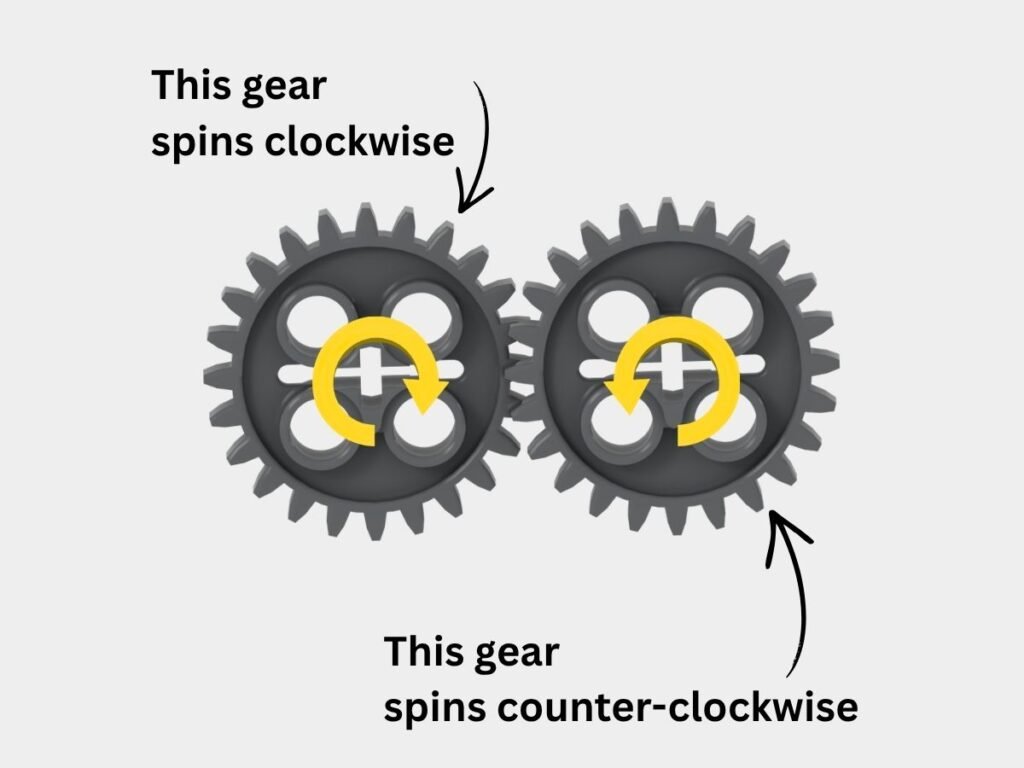
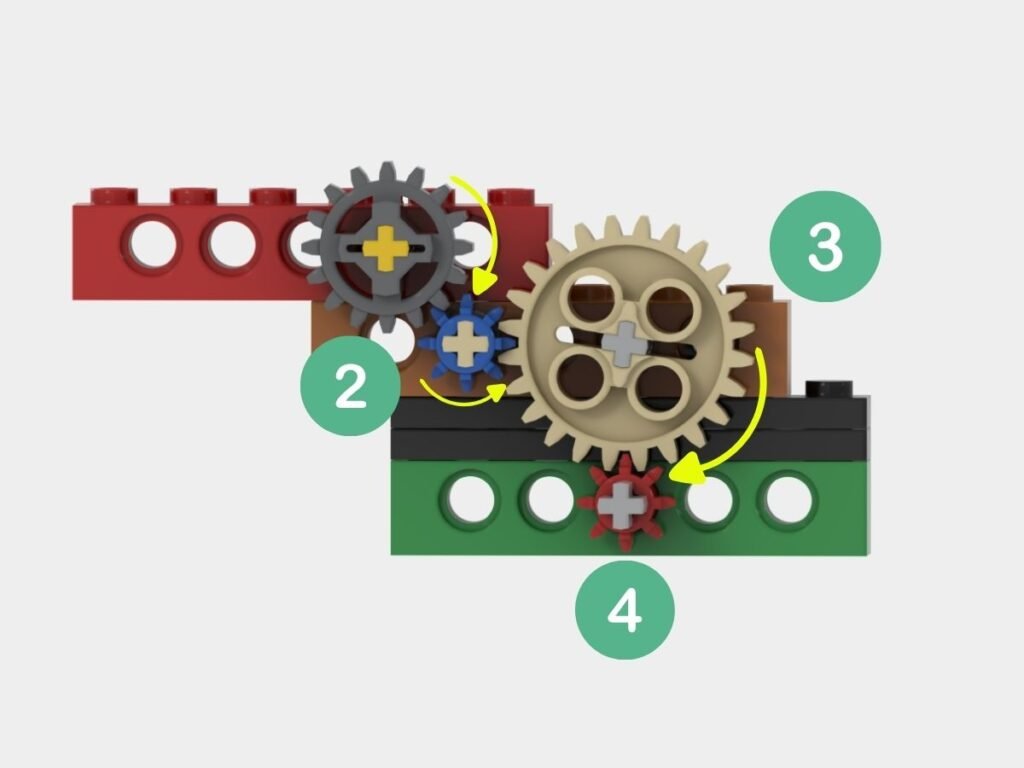
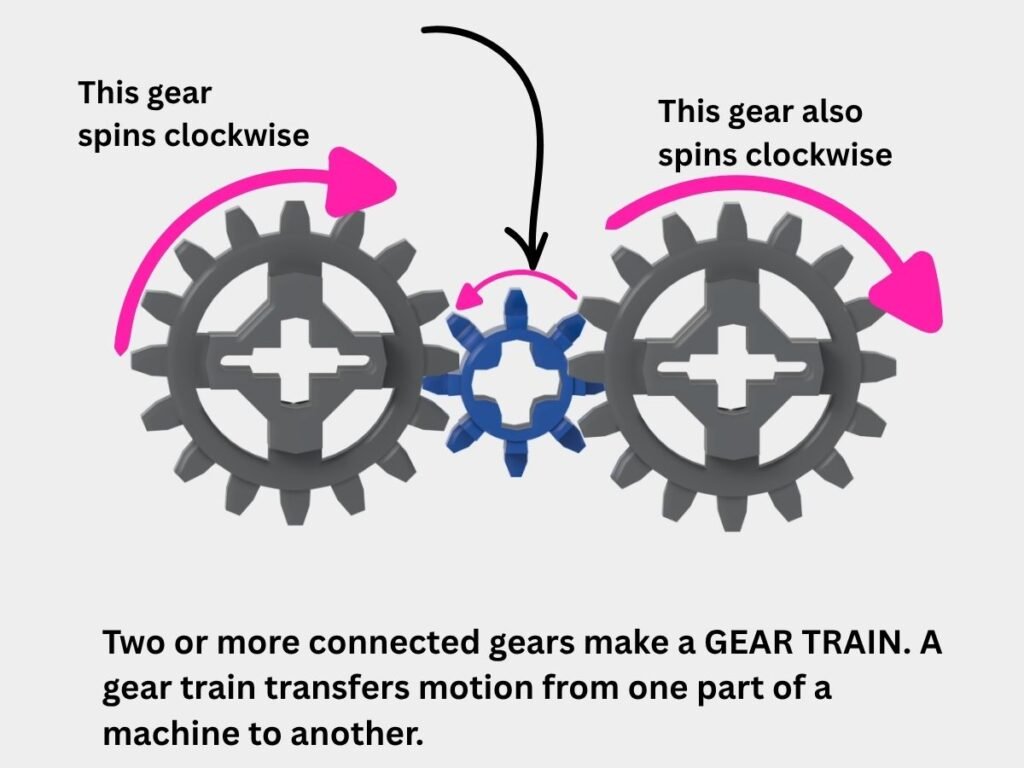
The gear that’s hooked to the motor is called the driver, because it starts the motion. The gear that ends up turning from that push is the follower (or output). Sometimes there’s a gear in the middle that just passes the motion along; that one is an idler. When two gears touch each other, they always spin in opposite directions—if one goes clockwise, the other goes counterclockwise.
WHAT CAN GEARS DO
Three practical ways this concept changes movement, force or direction.
A.
CHANGE SPEED
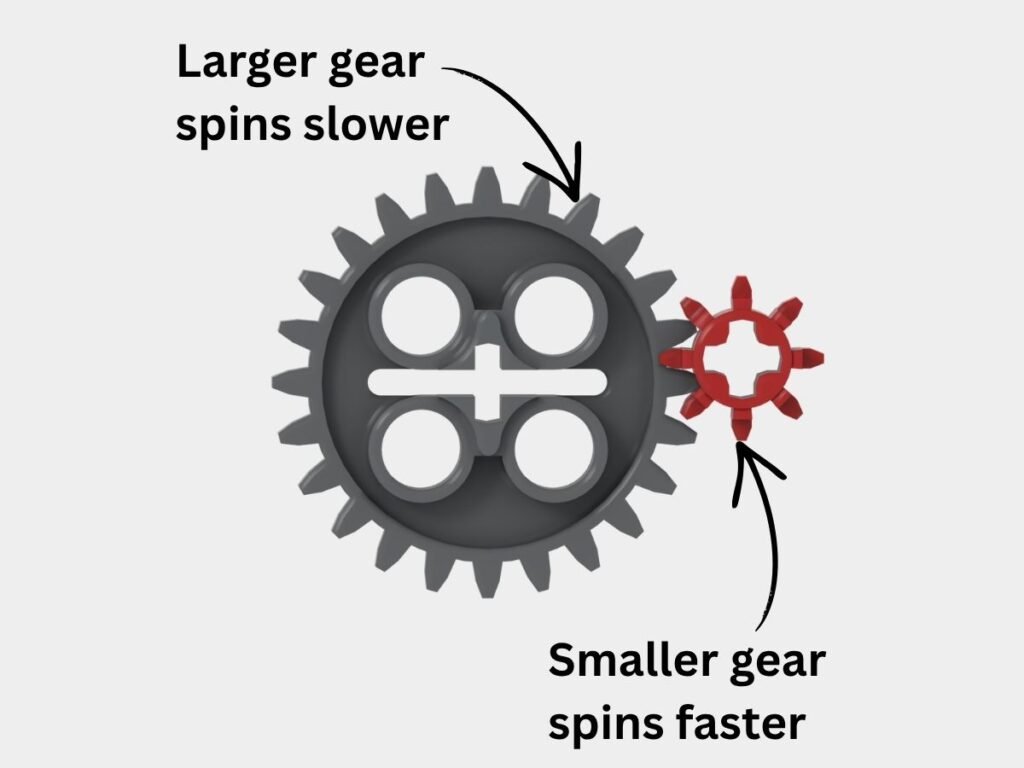
Having two gears of different sizes connected can make a machine move slower or faster

B.
CHANGE DIRECTION
Two gears connected to each other spin in opposite directions.
C.
TRANSFER MOTION
A “train” of multiple gears will transfer motion down the line.